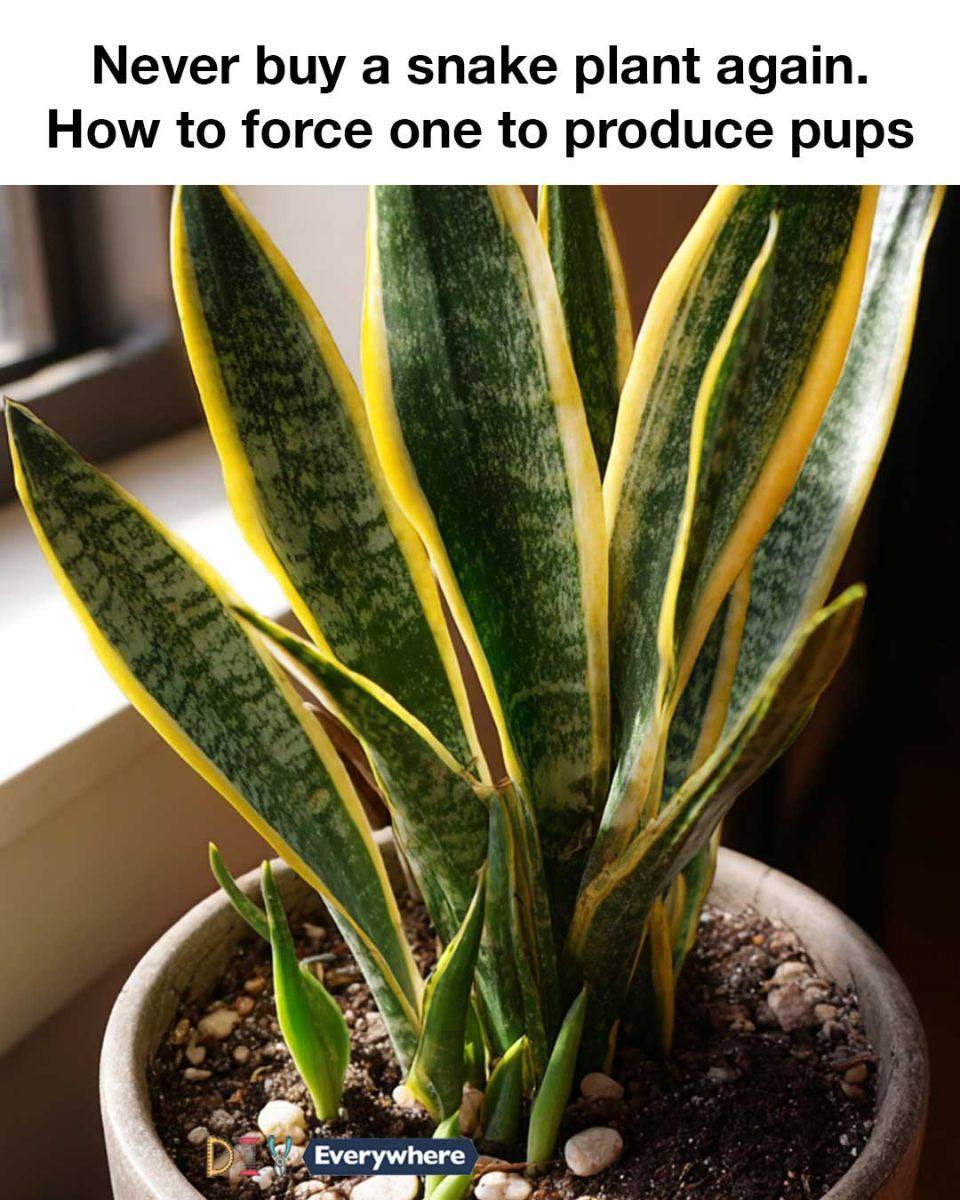
Stop Buying Snake Plants Immediately ⚠️ This ‘Illegal’ Trick Makes Them Multiply for Free
To encourage your snake plant to produce pups, it’s important to create the right growing conditions. Snake plants thrive in well-draining soil and prefer to be watered sparingly, allowing the soil to dry out between waterings. Overwatering can lead to root rot, which can hinder pup production.
Providing adequate light is also essential. While snake plants can tolerate low light, they grow more vigorously and produce more pups in bright, indirect light. A temperature range of 60-80°F (15-27°C) is ideal for encouraging pup development.
5. Creating the Perfect Environment for Growth
To optimize growth conditions, consider using a pot with drainage holes and a well-draining potting mix, such as a cactus or succulent mix. This prevents water from pooling at the bottom of the pot, reducing the risk of root rot.
Position your snake plant near a window where it can receive indirect sunlight for several hours a day. If natural light is insufficient, supplement with a grow light to ensure the plant receives the necessary energy to produce pups.
6. Viral Hack: The Water Propagation Method
One popular method for propagating snake plants is water propagation, which involves placing a leaf cutting in water until roots develop. This method allows you to monitor root growth and ensures that the cutting remains hydrated.
To propagate in water, select a healthy leaf and cut it near the base at an angle. Place the cutting in a jar filled with water, ensuring that the cut end is submerged. Change the water every few days to prevent stagnation and promote healthy root development. Once roots are a few inches long, the cutting can be transferred to soil.
7. Soil vs. Water: Choosing the Best Medium
Both soil and water propagation have their advantages. Soil propagation is often favored for its simplicity and direct transition to the plant’s natural growing medium. It involves planting a leaf cutting directly into a pot with well-draining soil and maintaining consistent moisture until roots form.
Water propagation, on the other hand, allows for more control over the rooting process and can be a visually appealing method. Ultimately, the choice between soil and water propagation depends on personal preference and the resources available.
8. Essential Tools for Successful Propagation
Successful propagation requires a few essential tools, including a sharp knife or scissors for making clean cuts, a container for water or soil, and a well-draining potting mix. Ensuring that your tools are clean and sanitized reduces the risk of infection or disease in the cuttings.
Additional tools such as rooting hormones can be used to encourage faster root development, although they are not strictly necessary. A grow light can also be beneficial for providing consistent light conditions, particularly in environments with limited natural sunlight.
9. Troubleshooting Common Propagation Issues
See more on the next page
Advertisement
