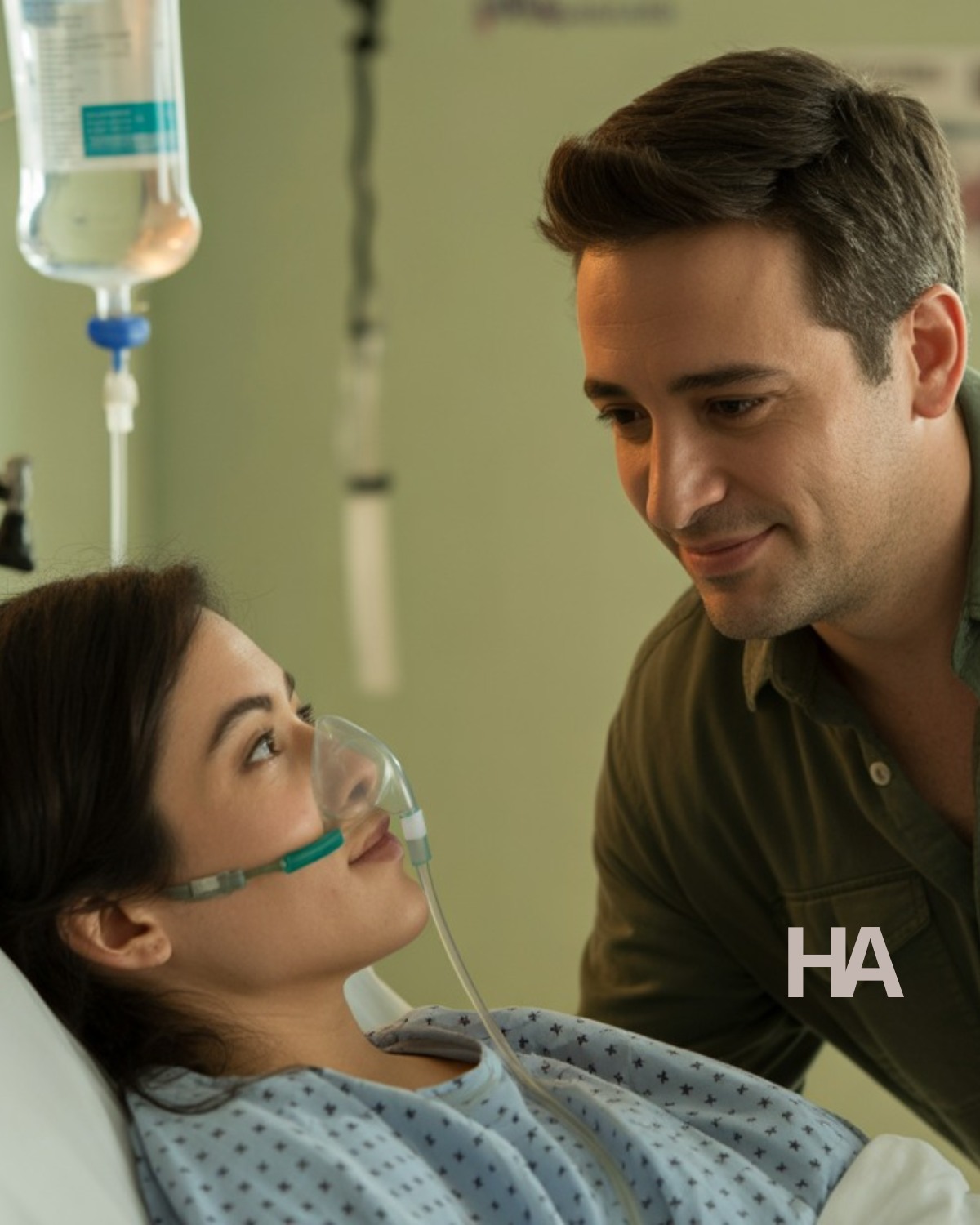
The person watching from behind the door was Ioana.
She was just a nurse.
Not a doctor. Not family. Not someone who was supposed to notice things.
But over the past few weeks, Ioana had become the one constant in that hospital room.
She was the one who adjusted the IV lines.
Who moistened the patient’s lips when they cracked.
Who checked blood pressure in the quiet hours of the night when the hallway lights dimmed and the machines spoke louder than words.
Somewhere along the way, she had grown attached to the woman lying motionless in bed — suspended in that fragile space between life and death.
Her name was Ana.
Ana had been unresponsive for weeks. Brain scans showed almost nothing. Doctors spoke in cautious, clinical phrases: non-responsive, minimal prognosis, no meaningful recovery expected.
And yet… Ioana talked to her anyway.
She told her about the weather.
About the sunrise she could see from the breakroom window.
About the coffee she hated but drank every night shift anyway.
And then there was Mihai.
Ana’s husband.
He came every single day.
Like a ritual.
Same time. Same jacket. Same tired eyes.
He would sit by her bed, take her hand, and whisper things no one else could hear.
He looked like a good man.
A grieving man.
A man destroyed by loss.
But that day… something about him made Ioana’s stomach tighten.
There was something in his eyes she hadn’t seen before.
Not sorrow.
Tension.
When the doctors told Mihai he could have a few moments alone with his wife, Ioana nodded and stepped out — as protocol required.
But she didn’t leave the hallway.
She stood there, medical chart pressed against her chest, staring through the small glass window in the door.
She watched Mihai lean close.
Take Ana’s hand.
Lower his mouth to her ear.
Whatever he said — it wasn’t loving.
It wasn’t goodbye.
His lips moved too sharply. Too fast.
And his face… his face was hard.
Angry.
Ioana felt a chill crawl up her spine.
Then it happened.
The monitors began to sound wrong.
Not the steady warning tone she knew so well — but something erratic. Chaotic. Off-rhythm.
Ioana didn’t think. She reacted.
She rushed into the room.
Mihai turned suddenly, startled — almost frightened.
“What are you doing here?” he asked, his voice low and shaking.
“I heard the alarm,” Ioana said. “Something’s not right.”
Her eyes dropped to Ana’s hand.
The IV needle was slightly displaced.
Ana’s fingernails were turning blue.
Mihai stepped back.
“I didn’t touch anything,” he said quickly.
“I just wanted to… say goodbye.”
Ioana didn’t answer.
Because nothing about this felt right.
Then the rest of the medical team rushed in.
Machines beeped louder.
Hands moved fast.
Voices overlapped.
The monitor line flickered.
Dropped.
And then — impossibly —
It rose again.
Everyone froze.
“That’s not possible,” one of the doctors whispered.
“There’s no brain activity. And yet…”
On the EEG screen, a thin line appeared.
Weak. Faint.
But real.
A signal.
Mihai stood perfectly still.
His face drained of color.
And Ioana noticed something that made her heart race.
In his eyes — there was no relief.
There was fear.
Like a man terrified of being heard.
That night, the doctors decided not to disconnect Ana.
“Probably a reflex,” they said.
“Electrical noise. Nothing more.”
But Ioana didn’t leave the ward.
At 3:00 a.m., the monitor’s green light pulsed stronger.
Ana’s breathing deepened — subtle, but different.
At 3:47 a.m., Ioana swore she saw a tear slide down Ana’s cheek.
She called the doctor.
By the time he arrived, everything looked normal again.
But Ioana knew.
She wrote it down.
The next day, Mihai returned.
His eyes were red — but his face was calm. Too calm.
Ioana told him what had happened overnight.
He didn’t respond.
He leaned toward Ana’s ear again.
Ioana stepped forward.
“Sir… you shouldn’t—”
He turned to her.
Cold. Flat.
“You don’t know what we lived through,” he said quietly.
“Sometimes death is a mercy.”
The words sliced through the room.
When Mihai left, the monitors spiked again.
This time, the activity was stronger.
Neurologists stared at the screens in disbelief.
“These are responses,” one said.
“Short, but clear.”
Ioana didn’t say it out loud.
But she knew.
Ana had heard him.
Days passed.
Mihai stopped coming every day.
When he did appear, he stayed only minutes.
Ioana, meanwhile, stayed longer than ever.
She talked.
She read aloud.
She held Ana’s hand.
And one night — when the hospital slept —
Ioana heard a whisper.
“…why?”
She froze.
Ana’s lips moved — barely.
Ioana called the doctor.
Nothing.
But the voice returned on later nights.
This time, Ioana recorded it on her phone.
Weak. Broken.
But unmistakable.
“Mihai… I know…”
Know what?
Ioana didn’t tell anyone.
But fear settled behind her eyes.
A few days later, Mihai was found dead in his apartment.
An overdose of sleeping pills.
Beside him — a note, written in shaking handwriting:
I thought it would be better this way.
I didn’t want her to suffer.
But she heard me…
and I can’t live with that.
When police arrived at the hospital, Ioana was holding Ana’s hand.
The monitors showed stable activity.
Ana’s fingers squeezed back.
That night, Ana opened her eyes.
Slowly.
Searching.
“Ana,” Ioana whispered. “Can you hear me?”
Ana blinked.
Once.
Then her lips moved.
“Mihai.”
The monitors surged — not alarms, but life.
Tears streamed down Ana’s face.
Over the next days, Ana improved.
Doctors called it a miracle.
The media named it “The Miracle of Central Hospital.”
But Ioana knew better.
One morning, Ana looked at her and whispered:
“He didn’t come to say goodbye.
He came to silence me.”
Ana told the truth.
The accident wasn’t an accident.
He pushed her.
He couldn’t accept that she was leaving him.
Months later, Ana wheeled into the spring sunlight.
She smiled.
“I can breathe on my own now.”
Ioana smiled back.
“Yes,” she said.
“You can.”
And for the first time, the silence around them wasn’t death.
It was freedom.
The Truth Doesn’t Die Quietly
The media called it a miracle.
Doctors explained it with cautious optimism — delayed neurological response, rare recovery window, unpredictable brain resilience.
Lawyers nodded. Reporters wrote headlines. Viewers cried at their screens.
But none of them were there at three in the morning.
None of them heard the whisper.
Ana survived.
And that meant the story wasn’t over.
The Police Came Back
Two weeks after Mihai’s death, detectives returned to the hospital.
This time, they didn’t come with condolences.
They came with questions.
Detective Laura Bennett was calm, sharp-eyed, mid-40s, the kind of woman who listened more than she spoke. She sat across from Ioana in a small consultation room, recorder on the table.
“You were on shift the night before Mihai died,” Bennett said.
“Yes.”
“You reported unusual monitor activity… and verbalizations from the patient.”
Ioana hesitated.
Hospital protocol said document.
Her conscience said tell the truth.
“I heard her speak,” Ioana said quietly. “Before anyone believed she could.”
The detective didn’t interrupt.
Ioana continued.
“She said his name. She said she knew something.”
Bennett clicked the recorder off.
“Do you still have the recording?” she asked.
Ioana’s throat tightened.
“Yes.”
That single word changed everything.
The Recording
In a sterile evidence room, the sound played through cheap speakers.
Static.
Beeping machines.
A breath.
Then — barely audible —
“Mihai… I know…”
The room went silent.
One of the detectives exhaled slowly.
“That’s not reflex,” he said. “That’s awareness.”
The investigation was reopened.
Mihai’s death was ruled a suicide — but now it was suicide with context.
And context matters.
The Accident File
See more on the next page
Advertisement
See more on the next page
Advertisement
