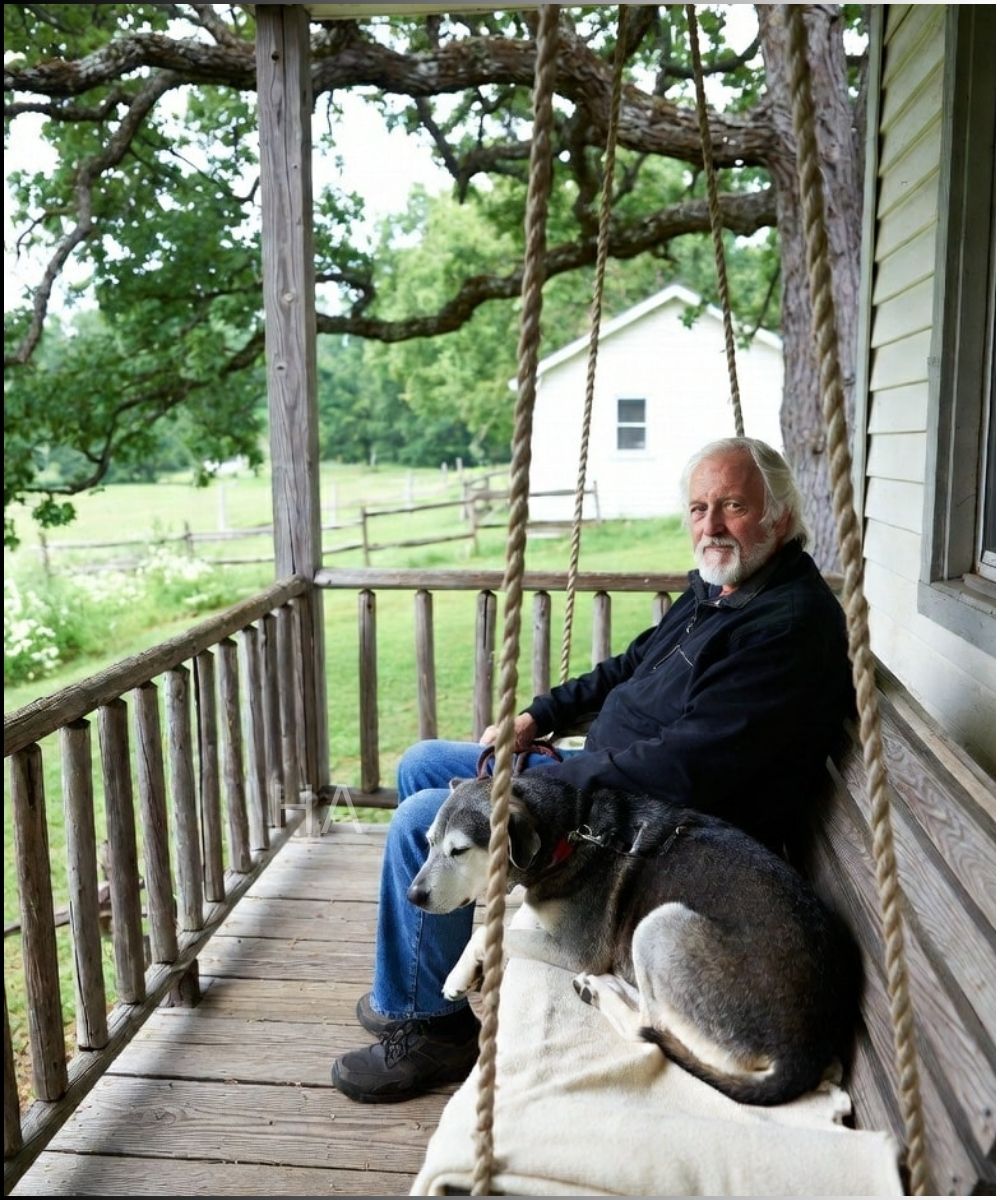
Grief is strange that way. It doesn’t always roar. Sometimes it settles like dust, coating everything evenly until you forget what clean air feels like. The kids called more then, for a while. They told me to consider selling the farm, downsizing, moving closer to them. “It’s too much for you alone,” David said, practical as always. “You shouldn’t be out there by yourself.” Susan cried when she said it, said she worried about me slipping, about emergencies. I listened. I nodded. Then I looked at the fields, at the barn, at the porch swing that still held the shape of my wife’s body, and I knew I wasn’t going anywhere.
Buddy became my calendar. His breakfast told me it was morning. His slow walk to the porch told me it was evening. The seasons turned and he marked them with his body. In spring, he lay in patches of sun like he was charging himself. In summer, he sought the shade beneath the old oak. In fall, he followed me through leaves that smelled like memory. In winter, he stayed close, his warmth a quiet promise.
The children visited less as time went on. Not because they didn’t care, but because caring competes with a thousand other obligations. When they did come, it felt like hosting strangers who shared my face. They spoke in updates, in achievements and frustrations, while I nodded and asked questions, unsure where to fit my own days into their stories. The grandchildren grew tall and clever, their fingers quick on screens, their attention always somewhere else. I don’t blame them. The world they’re growing up in moves faster than mine ever did.
Last Thanksgiving was when something in me finally settled. I had been looking forward to it more than I realized. I cleaned the house, polished the table, set out the good plates Sarah loved. I roasted the turkey slowly, the way she taught me, basting it until the skin shone. When the call came, apologetic and rushed, explaining cancellations and conflicts, I stood in the kitchen with the phone pressed to my ear and stared at the steam rising from the oven. I said I understood. Because I did. And because saying anything else wouldn’t change a thing.
I ate alone that night, carving slices I didn’t need, filling plates that stayed empty. Buddy sat by my leg, his head heavy against my knee. I fed him scraps under the table, laughing softly at myself when I realized it was the best company I’d had all day. Later, as I packed leftovers into containers, I thought about fairness. How often we use the word like it’s a simple measurement, a balance sheet. As if love and presence can be weighed the same way property can.
See more on the next page
Advertisement
